Showing posts with label Writing Poetry. Show all posts

Thursday, January 30, 2014

Inspired by the Artist


By Kenneth A O'Shaughnessy

Art is designed to evoke a response. Sometimes that response is wonder, sometimes envy, sometimes revulsion, and sometimes, more art. Ekphrastic poems are poems written about another kind of art, like film, dance, or painting.

In the poem below, I write ekphrastically about two kinds of art: the art of the drawing artist, and the art of the Creator. 

The drawing below was made by 10 year old Anya. It depicts her naturalist younger brother examining a caterpillar he found.

The poem pays tribute to the artist by using her initials as the acrostic for each verse, and relates her drive to draw to the way she was created by the first Artist.
And if I be lifted up, I will draw
Lines that define a world created
Dividing light from darkness

And the earth was without form
Light made shade and shapes appeared
Darkness directing the eye to light

And God made man in his image
Lifting up a stick figure with his finger
Dust filled with artistic Spirit

And God saw that it was good
Loving what he had made for himself
Despite its imperfections

And if I be lifted up, I will draw
Like the artist who created me
Doing what I was drawn to do


Kenneth A O'Shaughnessy is a freelance writer and poet living in the upstate of South Carolina with his wife and four children. To find his daily poetry entries, log onto: 

or find him on Amazon here:

Thursday, November 21, 2013

Writing Challenges

By Kenneth A O'Shaughnessy


One way to focus on your writing practice is to participate in a challenge. Most are familiar with NaNoWriMo, in which the participants try to write 50,000 words (the length of a short novel) during the month of November. But some write to write something shorter - like poetry. What challenges are out there for them?

For those looking to do something short and sweet, there's NaHaiWriMo, a month with daily challenges in writing haiku. As in all of these challenges, you are provided with a topic each day, and you try to write your best haiku about that topic.

Thursday, October 31, 2013

Dress Up Time


By Kenneth A O'Shaughnessy
My son Stephen, unintentionally
looking like Edward Scissorhands

Whether you celebrate Halloween or not, it seems like a good day to talk about how you dress up your poems. Do they always “say what you mean, mean what you say”? Or do you use them to get across a different message entirely?

Where you wind up with your poem doesn't have to be intentional. Sometimes heading for a clever twist is a sure way to come off stilted and contrived. I like to be as surprised by where my poems wind up as my readers (hopefully!) will be.

Thursday, October 24, 2013

Acrostic Poetry

By Kenneth A O'Shaughnessy


If you are looking for a challenge, or for inspiration, a fun way to play with words is to try writing an acrostic poem. In an acrostic poem, the first letter of each line is part of a sequence, usually a word or a phrase. A well-known biblical acrostic poem is Psalm 119 (118), in which each stanza has all of it’s lines begin with the same letter of the Hebrew alphabet in order.

Thursday, October 17, 2013

How to Write Poetry for Children (And Everyone Else, Too)

By Kenneth A O'Shaughnessy


A young friend read this poem to me earlier this week, and then she read it over and over. It caused me to consider what makes a poem connect with its readers, even when it is something so simple as this:


Kitten, my kitten
soft and dear
I’m so glad
that you are here
Sitting together
just us two
You loving me
and me loving you.”


What can we learn about connecting with readers from this simple children’s poem?


Use a Familiar Theme
Sitting with a kitten in your lap is a common pleasurable activity for nearly everyone, especially every child. Whether you are writing for children, women, theology buffs, or even men ;-) there is always something common to them that will develop that instant interest in what you have to say. I tend to be guilty of writing from obscure ideas that excite me but mean nothing to other people - they can be fun, but they don’t get feedback from the readers that makes writing a communal effort. Writing from the familiar goes to where the reader is and brings her to where you want to go.


Use Simple Phrases
Each phrase of My Kitten holds together alone as an idea to which every child can relate. This keeps the reader engaged and following the flow of the idea. While the phrases are simple, one has a depth of meaning that makes them both functional and essential to the concept of the poem.


Use Feeling Words
Feeling words connect with the reader on a visceral level, both physically and emotionally. Words like “soft and dear”, “glad”, and even “sitting together” help the reader feel your ideas, not just understand them intellectually. And good poems, as with most good writing, are about the feelings that are evoked.


Personalize
Personalization doesn’t have to mean putting the poem into the mouth of the reader as we see in this poem. It does mean connecting with the reader’s experience, and using it to create a new experience in the reading of the poem. We as poets want our work to belong our readers in a way only each reader can experience. This poem accomplishes this in multiple layers, from the familiar activity of holding a kitten to the love we experience by being together with someone.


Here is a children’s poem suitable for this time of year - I hope it connects with you:


Mom called my brothers and me for dessert
We shot in like a cannon blast
I knew she was serving my favorite treat
And I did not want to be last


There, slopping out of our mammoth-skull bowls
Was that yummiest, oozy glop
Three towering dollops of cold eyes cream
With congealed scary on top


I gobbled it up like a monster should
Using all my fingers and toes
I ate it so fast that I choked real good
And gobs of it shot out my nose


I like to sling food at my brothers’ heads
But I love eyes cream so much more
So I used all my tongues and tails and teeth
And I licked it up off the floor


Now that my big furry belly was full
And I had swallowed every slurp
I flopped down in front of the monster box
And let out a monstrous burp


My brothers all burped out loud just like me
Then we started to scream and hop
"Bring us some more of our favorite stuff:
More eyes cream with scary on top!"


Kenneth A O'Shaughnessy is a freelance writer and poet living in the upstate of South Carolina with his wife and four children. To find his daily poetry entries, log onto: 

or find him on Amazon here:

Thursday, October 10, 2013

Finding Poetry in Prose

By Kenneth A O'Shaughnessy


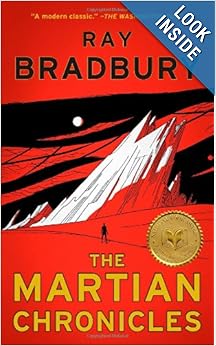
One of my favorite authors, Ray Bradbury, primarily known for his short stories, has been called a poet, and actually published several books of poetry. But it is actually his prose 
for which he has been called a poet.

Thursday, October 3, 2013

How to Find “That Word”

By Kenneth A O'Shaughnessy


So you’ve written a few lines that really grabbed you, and you know exactly where your poem is going, but to get there you need a word that rhymes with “bottle” or that starts with the letter V. Suddenly your mind is blanker than the paper you’re staring at. What do you do?

The two best resources I've found so far for finding a word that starts with a specific letter are http://www.scrabblefinder.com/ and http://www.wordbyletter.com/. Both divide the list by word length. Scrabblefinder lists the words in columns, and Word By Letter lists them in blocks - which you prefer will depend on personal viewing preference.

Thursday, September 26, 2013

Occasional Poetry

By Kenneth A O'Shaughnessy


Have you ever heard about an event and said to yourself, “Someone should commemorate this with a poem”? Poems written for the specific occasions are, appropriately enough, called “Occasional Poetry”. An occasional poem we should all be familiar with in America is The Star Spangled Banner by Francis Scott Key.

Thursday, September 19, 2013

Words in Their Natural Habitat

By Kenneth A O'Shaughnessy

Words in Their Natural Habitat


Poetry is the natural use of words, even more natural than expressing facts. In fact, the word “expression” describes the purpose of poetry: it is used to communicate a feeling or idea in much the same way that a facial expression is.

The earliest human written document is poetry, the Epic of Gilgamesh. Like virtually all early human writing, this epic poem describes the relationship between man and the gods. Nearly every religion’s scriptures use poetry to communicate ideas about God.

Thursday, May 16, 2013

I Dreamed of You

By Laurie Epps

This May Column is dedicated to the moms who have lost a baby either in the womb or after birth.

Dreams. The moment you find out you are pregnant, you start dreaming about your baby. Everything from your baby's nursery, to what your child would look like are creeping into your every thought. Sometimes we even dream about what the baby grow to maybe become one day. All those dreams are lost the day your child is either miscarried, still born, or dies at a young age. It seems like such a tragedy. Share your dream with me in the comments section.

Thursday, April 18, 2013

My Daughter's Favorite Poem

April is National Poetry Month

As a child, I loved poetry. This month's  poetry is for a new generation of readers. Children just love the use of rhyme in a poem. I wrote this quaint little poem for my daughters, and they always ask me to recite it to them. It is close to my heart. So for my daughters, especially Ellen Brooke, this poem is cheerfully dedicated.
~ Love, Mom


Thursday, April 4, 2013

Markets for Children's Poetry

April is National Poetry Month

Since it is National Poetry Month, I thought it would be fitting if I addressed our next generation of writers. Most writers start off as avid readers, so the highest calling as a writer is to write to children. I could think of no one better to do that than Pam Zollman. Pam is the former editor for Highlights Magazine, and speaking at the upcoming Blue Ridge Christian Writers Conference in May.

Thursday, March 7, 2013

Thoughtful Thursdays: A Poetic Column

What defines a lyric poem?

Lyric poetry is when the writer is using first person to express thoughts and feelings of the poet. This term is coined by the use of the lyrical, or melody-like sound of the notes the various words sing out when the poem is recited. Examples of a lyrical poem would also include Sonnets (Feb. 2013 Columns) or Ode's (not covered yet)


Thursday, February 28, 2013

Thoughtful Thursdays: A Poetic Column

There are many different types of Sonnets, but the most common type of Sonnet is the English Sonnet, or the Shakespearean Sonnet. Last week we talked about rhyme scheme and iambic pentameter. How to know if the sounds, or notes resonated are the right tonality. But today, we will talk about creating that for yourself, and show you a truly modern day Sonnet from Kenneth O'Shaunnessey. Buckle up, this week will be a lot of fun.

Thursday, February 21, 2013

Thoughtful Thursdays

The hardest part about writing a sonnet is true also true of writing about anything. You must begin to write something to have a tangible piece of work to manipulate words much like a sculptor manipulates clay. Armed with a basic knowledge of the criteria will have you writing sonnets like a pro in no time.


Thursday, February 14, 2013

Writing Sonnets


Happy Valentines Day! The most famous type of love poem is the sonnet. So today, I'd like to talk to you about what makes a poem a sonnet, and next week we will begin to talk about how to write a sonnet, and share some local authors contributions to the sonnet. This is not your Hallmark type greeting, instead it is an art form with a very different musical sound to it that resonates sentiment.


What is a sonnet? 
Sonnets were made popular by William Shakespeare. Generally speaking, most sonnets have 14 lines and four quatrains.


  • Sonnets have a very definite rhyme scheme. (Example: ABAB, CDCD, EFEF, GG)
  • Sonnets are written in iambic pentameter. This means that each lines contains ten beats (syllables). What makes it iambic is that they alternate stressed and unstressed syllables.


Four Quatrains:

1. First Quatrain: This should establish the topic of your sonnet. Rhyme scheme: ABAB (4 lines)

2. Second Quatrain: This should establish the theme of your sonnet. Rhyme scheme: CDCD (4 lines)

3.Third Quatrain: This should round of the theme of your overall sonnet. Rhyme scheme: EFEF (4 lines)

4. Fourth Quatrain: The soul purpose of the fourth quatrain is to act as a conclusion to the sonnet. Rhyme scheme: GG (2 lines)

So give it a whirl, and you'll be writing sonnets in no time. Next week, you'll learn how to write sonnets and there will be a poet showcased. For now, give it up to the guy that started it all. 

Thursday, February 7, 2013

Writing Love Poems

Love Poems
With Valentines Day on the horizon, I thought it would be a cinch to teach you and your kids to write love poems like a pro. After many painful hours of research, I can tell you, that love poems, as famous as they are, aren't actually a separate form of poetry. But I can share with you some tips to get your poem going in the right direction.


Thursday, January 31, 2013

Thoughtful Thursdays: A Poetic Column

Hello. My name is Laurie Epps. I am a senior at Anderson University and I have been writing for most of my life. My first love of writing was Poetry, so it would stand to reason that my first real column would be devoted to the craft of words and alliteration that I love so much. I hope you will come back every Thursday to see my latest work, as well as, spend time to get to know different sorts of poetry with insightful columnists who will teach you how to write it yourself.

Just so that you learn a little more about me as a writer, I received my first poetry book when I was seven years old. I memorized nearly every verse, and I was captivated by the beautiful words of poetry. Through the colorful pictures and words rich in imagery, I escaped to another world.


This past Christmas, my dad sent me my beloved old Poetry book. I cried when I opened it. It was like a long lost friend. So much of my childhood was wrapped around it's words of rhyme.


When you open my poetry book, you can tell which verses were my favorites because of the acid stains from my hands on its pages. Every stain has a memory, and an imprint from my childhood. Inside the front cover, you can see where I wrote my name in cursive for the first time.


This poem in particular, I recited to my fourth grade class from memory. My teacher was delighted that I memorized such a long poem. She was also told my parents that the other students were on the edge of their seats listening to my poem. It was the first time I can remember feeling proud of myself in my young life.


I am so excited to take this journey with all of you. Come back every Thursday, and we will begin the conversation.

Thursday, January 24, 2013

Thoughtful Thursdays: A Poetic Column


Beginning
January 31, 2013

1writerlaurieepps.blogspot.com will offer a weekly column devoted to poetry. This column will start with the basics. First we will explore different types of poetry, and what makes them that type of poetry. We will offer instructions on writing the various types of poetry, and give current poets a chance to showcase their work.

So get to writing! We would love to hear from you.


Sunflower Photobook

Sunflowers Captured By My iPhone 8 By Laurie Bower Epps I knew I was in need of headshots since my last photoshoot was in either 2012 ...