Showing posts with label Poetry Columns. Show all posts

Thursday, July 31, 2014

An Analysis of Ozymandias

By Laurie Epps

Welcome back. Sorry I've been gone so long, but we're going to continue on our with our studies of Romantic Poetry. Today, we'll be talking about Percy Bysshe Shelley.

Percy Bysshe Shelley:

  • Born August 4, 1792 at Field Place near Sussex, England.
  • He was the eldest son to Timothy and Elizabeth Shelley.
  • Therefore, he was due to inherit a large estate. (1 Brother-4 Sisters)
  • Percy attended Eton College for six years beginning in 1804 where he began to write poetry.
  • He transferred to Oxford but was expelled less than a year later for his co-authorship of "The Necessity of Atheism." (Co-authored with Thomas Jefferson Hogg.)
  • That pamplet was so tragic for Shelley because it also estranged him from his father for two years (which left him in dire financial straits).
  • When he came of age at 19, Percy reconciled with his father and wed Harriet Westbrook by elopement in Scotland.
  • In December 1816, Percy's wife Harriet committed suicide.
  • Three weeks later, he married Mary Godwin, most commonly known for her authorship of Frankenstein.
  • Due to his quick re-marriage, it was considered to be free love, Percy lost custody of his two kids that he had with Harriet.
  • Tragically, he died a year later attempting to sail from Leghorn to La Spezia, Italy on his schooner the Don Juan.

Thursday, June 12, 2014

Heroism in Battle and Poetry

By Laurie Epps

The story of the boy of Casabianca is shrouded in mystery. There's not enough attention paid to it in classrooms in America. I know it was written across the pond in the U.K. but it has strong literary value. This poem was memorized and recited by school children in England up till the 1930s. Proper homage should be paid.

But first, I'm going to tell you a little about the poet herself, and she had a love of literature at young age just as I did. After a very minimal amount of research, I learned I've got a lot in common with Felicia Dorothea Hemans.
Felicia Dorothea Hemans
1793-1835

Thursday, June 5, 2014

We Are Seven

William Wordsworth
1770-1850
By Laurie Epps

Coping with death is hard at any age is difficult at best. However, in today's poem, the wisdom is spoken by a child. In this poem from William Wordsworth, I'll give you a little background on the author, and then my analysis.

William Wordsworth was born on April 7, 1770 in Cumberland, England to John & Anne Wordsworth. He was the second of five children. His father was a lawyer and owned a lot of property, so the family was well off.

When Woodsworth was 17, his mother died, and he went to study at St. John's College in Cambridge. On his first college break in the summer of 1788, William spent the summer hiking extensively through France, Switzerland, Germany, and Wales.

Thursday, May 29, 2014

The Genius of William Blake

William Blake 1757-1827
By Laurie Epps

When you discuss poets of the Romantic Era, nobody can have an intelligent discussion without the mention of William Blake. So today, though he's known for a lot of works, as both poet & painter, I've selected a few of my favorite depictions of William Blake's life.

William Blake is often referred to as the prophet of Great Britain, and he's revered as a visionary. As exemplified in his famous hymn, Jerusalem, Blake wrote not only an unofficial anthem for Britain, but is also his opus giving England a hymn of an idealized Britain.

Thursday, May 22, 2014

On This Washing Day

Anna Laetita Barbould
1743-1825
By Laurie Epps

Anna Laetitia Barbould was very close with her brother. Her brother's influence was so great upon her life, in part because he was the first one to tell her that she should write and later encouraged her to publish her poetry. Today, ALB reminds us of the playfulness of poetry. Told from a child's perspective, Washing Day reminds us that every truth in life is largely dependent on your perspective.

The collaboration of work between her younger brother, John Aiken and her has resulted in Evenings at Home and Monthly Magazine. Barbould even raised her brother's third born son.

In her own life, her husband Rochemont Barbould was a French Huguenot and sought asylum in England where the two fell in love. They were married in 1774, and bore no children, but ran a children's home until 1785. Her love of children highly influenced her writing, and she often plays around with writing from a child's perspective.

Unfortunately, by January of 1808, Rochemont's health was deteriorating, and he was stricken by mental illness. At one point, he chased her around a room of their house with a knife. Barbould, afraid for her life jumped out the window to  the safety of her garden. However, it shook her up so terribly that she had to make the painful decision to be separated from her husband in March of that year. This was followed by many entries about grief and loss. By November of that year, her husband escaped his mental institution and drowned himself in the river.

Thursday, May 15, 2014

The Mouse's Petition

Anna Laetitia Barbould
1743-1825
By Laurie Epps

The Romantic Period of British Literature was unique, in that, it brought about new ways of seeing things. There was a deliberate attention given to the diminishing natural world. Focus was now being shifted to individual points of view, and these elements influenced poetry by making it more lyrical in quality.

In most British Literature courses, it begins with Anna Laetitia Barbauld. Barbould was born in 1743, and was educated at home by her mother in Leicestershire, England. In 1772, she married Rochemont Barbould. 

Friday, April 18, 2014

Little Orphan Annie

By Laurie Epps

I just wanted to write a formal apology to my readers for not having my poetry blog up the past two weeks. My youngest has had an ear infection since early March, and she's not responding to antibiotics. The only action left for the doctor's is to place tubes in her ears surgically. I'm hoping that they will be able to do this after I graduate college in two weeks.

To the rescue, is my guest blogger, Kenneth Alan O'Shaunnessey, who will write a Thoughtful Thursday column for me next week while I'm in the midst of finals. Thank you for understanding, and please pray for Chloe.

Thursday, April 3, 2014

The Land of Nod

By Laurie Epps

April is National Children's Poetry month, and since my love for poetry began at such a young age, I see the importance of teaching poetry to young children. If you don't know how to teach your children about poetry, don't analyze it. Just read it. I fell in love with the meter, metaphors, and lyrical quality of poetry long before I knew what all those words meant. Read poetry to your children, it's important.

Robert Louis Stevenson was born in 1850 in Edinburgh, Scotland to a Lighthouse Engineer and his wife. Stevenson was sick most of his life, and caused irregular attendance in school. Most known for Treasure Island and Dr. Jekyl and Mr. Hyde, Stevenson wrote his poetry in his thirties and dedicated them to the nurse that cared for him as a child.

Thursday, March 20, 2014

Happy Spring Ya'll


Intro By Laurie Epps

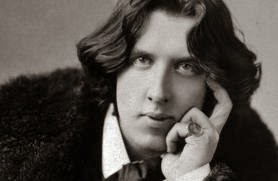
The first day of spring brings to us many promises of hope and rebirth. My poem selection for today is from Oscar Wilde. I wrote a paper on Oscar Wilde in my Victorian Literature class, and he's definitely one of my favorites of this era.

Oscar Wilde was born in Dublin in 1854. He lived to be 46 years of age, and I celebrated my 46th birthday yesterday. His mother, Lady Jane Francesca Wilde was also a poetess, and wrote under the male pen name Sperenza before Oscar was born. His father, Sir William Wilde was a specialist of the ear and eye. His mom was active in the women's rights movement, and is said to have ignored his dad's affairs. The affairs increased after he was promoted to be the Oculist in Ordinary to the Queen.
Oscar Wilde (1854-1900)

Thursday, March 13, 2014

Irish Love Poetry

Margaret Widdemer (1884-1978)
Intro by Laurie Epps
Today's poet is American born, but she really hits my theme for March and is a good introduction to "Irish" poetry. Born in Pennsylvania, and raised in New Jersey, Widdemer is most known for her novels, and lived out her adult life largely in New York City.
Margaret Widdemer (1884-1978) is a U.S. born poet who wrote volumes of poetry throughout her life, but focused on social issues of her day. Margaret won many prizes for her poetry including the Lyric Prize, the Trimmed Lamp Prize, and the Literary Review Prize for Satire. Widdemer served as the Vice President of the Poetry Society of America. Her highest honor is winning the Pulitzer Prize for Poetry in 1919.

Thursday, March 6, 2014

The Isle of Innisfree

By Laurie Epps

For the next few months, I'd like to try something a bit different for this column. While this will remain a column that is directly dedicated to the fine art of poetry, we're going to begin to talk about the masters of poetry. Who are they? What made their poetry so lasting? These questions and more will be covered by this column.

In light of St. Patricks Day occurring in March, we'll begin with some very classic, and timeless Irish poets. Feel free to nominate a poet in the comments section below, if there is a poet that you'd like to see specifically, for Thoughtful Thursdays own version of Dead Poets Society.

Thursday, February 20, 2014

Me and My Horse


Bonheur, The Horse Fair

Intro by Laurie Epps

My daughter Ellen has always loved horses. At one point this was problematic because she had to choose between horses and the ballet. Wisely, she chose ballet, but it wasn't without some torment.

Please keep in mind that this was a poem written by a little kid about why she loved riding horses. So in tribute to the Year of the Horse, please enjoy her quaint little poem.
Photo courtesy of Stride Photography in Ramona, CA

Thursday, February 13, 2014

Taming the Flame

By Laurie Epps

In honor of Chinese New Year, I've got my first guest writer for my horse theme for the month of February. Please welcome Krystine Kercher who has graciously offered to share her poem with all of us.

Horses evoke such powerful images of loyalty, and majesty. Krystine's poem speaks to us about the relationship between a boy and his horse, albeit, that the horse is classically stubborn.

Her poem is part of an anthology, and to purchase a digital copy of the book, click here.

Thursday, February 6, 2014

The Runaway

By Laurie Epps 

January 31, 2014 marked the New Year for the Chinese culture. This year on the Chinese zodiac is the year of the horse. 

Happy New Year 2014!


In honor of the New Year, I'll be accepting your poem submissions to publish here on my blog about horses. Feel free to use any length of poem, and even feel free to experiment with Chinese poetry styles.

To demonstrate what I'm looking for, today take a moment to look at a fine poem by Robert Frost. I like to look at Frost whenever possible because there is always multiple themes that can be read and seen within each poem.

Thursday, January 23, 2014

Hauntings: The Work of Toni Scott

By Laurie Epps

In honor of African-American history month, I respectfully dedicate this column to their national legacy. 

Toni Scott is a painter and sculptor from Los Angeles, CA. I was fortunate enough to have met her briefly this past fall when her Bloodlines exhibition was showcased in my school's Vandiver Gallery. As the descendent of slaves, Europeans, and Native Americans, her artwork is very personal and tells us a lot about her family history.

Something about Toni Scott's artwork, and the presence of this very talented artist spoke to me on a very intrinsic level. Her line entitled Bloodlines, tells the story of slaves in this country. Though centered around tragic events, this is also a tale of triumph of the human spirit. (Much like the artist herself.)

To view the exhibit that was at my university, click here.

Thursday, January 16, 2014

Love and Infatuation: A Story of a Young Woman

By Laurie Epps

Last spring in my Art History class we had a creative writing option in lieu of our term paper assignment. Being a creative writing major, and completely burnt out on a thesis driven paper, I just embraced the idea to express myself and my ideas in a different way.

Of all the portraits, Portrait of a Young Woman by Mary Louise Elisabeth really resonated with me. I imagined the subject of this French rococo painter to have the sweet and precocious nature of Marianne as in Sense and Sensibility by Jane Austen. So I just went with my idea, and much to my essay's delight. I hope you will all enjoy reading it as much as I enjoyed writing it.

Thursday, January 9, 2014

My First Ekphrastic Poem

Claude Monet 1840-1926
By Laurie Epps

I confess, when I went to Paris to live there in my teen years, I didn't know a lot about art. I loved it though, and something about it resonated with me on a basic and intrinsic level. Almost instinctually, I knew what I liked, and what I didn't like. Often, this response was much different or even opposite of looking at an art book in school.

While in Paris, I fell in love with Claude Monet. I'll never forget the day I saw one of his paintings at the Jeu de Paume in Paris. I stopped in my tracks and was struck with awe. I think I sat in front of one of his famous japanese footbridge and water lily kind of paintings for three-four hours. That really short changed my time for the rest of my visit!

Thursday, January 2, 2014

Ekphrastic Poetry

By Laurie Epps

Ekphrastic Poetry is the topic for January 2014. But before we go any further, we must discuss what ekphrastic poetry is. Loosely, the word Ekphrasis means the writer is making a comment about another art form or is making a response to it.

A classic example is John Keats poem, "Ode to a Grecian Urn." I will be writing this style all month, and I welcome you to also send entries for my January 30, 2014 column.

Thursday, December 26, 2013

Why I Love Poetry

By Laurie Epps

I've told this story before, but today I'll uncover what elements of poetry make it so endearing to me.

So join in, and let me know why you love poetry in the comments sections below. I'd love to hear from you.

Happy New Years everyone! I couldn't have done this without all of you.

Blessings,
Laurie

Thursday, December 19, 2013

Gingerbread for Christmas

By Laurie Epps

There's something about gingerbread that just calls to my five year old this year. Therefore, I cheerfully dedicate this column to my daughter Chloe.

Gingerbread got it's origins in Europe during the eleventh century. In some places it was a spiced cake, but in other regions it was more of the firmer, building material of yummy goodness we think of today. But in it's original form, it was strictly squares or the spiced men.

During Medieval Times, the French perfected it, and used ginger not only for its spiciness, but also it's preservative quality. 

In the nineteenth century, Germans modernized gingerbread and it became the confection we know and love today. Various forms became available and the Germans exchanged it between villages beginning in late fall every year. Gingerbread became popularized by the fairy tale from Brother's Grimm called Hansel and Gretel. The Germans brought their unique recipes and techniques for making gingerbread to colonial America. To learn more about the history of gingerbread, click here.

Sunflower Photobook

Sunflowers Captured By My iPhone 8 By Laurie Bower Epps I knew I was in need of headshots since my last photoshoot was in either 2012 ...